Environmental Sustainability
We’re leading a transformation of the environmental impact of your Market; for our traders, our shoppers, our community, our planet.
South Melbourne Market has made significant changes to reduce the environmental impact of our operation over the years. To continue being a leader in environmental sustainability, we are working towards achieving three key strategic priorities that have been identified in our 2023-27 Environmental Sustainability Strategy.
- Wipe out waste
- Transition towards a zero-carbon operation
- Reduce water use and impact on water ways
This Strategy will help us to achieve the best environmental outcomes for our traders, shoppers and local community, both now and into the future.
Strategy achievements
Since launching the Strategy in June 2023, the Market has implemented a range of initiatives to improve our sustainability:
- Delivered two rounds of our Early Adopter Sustainability Grant program. Grants have been awarded to five Market traders who are committed to making a sustainable transformation in their businesses. Click here to read more.
- Installed new and improved bins for our customers, including additional organic, recycling and shell bins throughout the Market.
- Increased the volume of food donated to food rescue programs through a new partnership with Port Phillip Community Group.
- Implemented new sustainability criteria for all new traders joining the Market and existing trader licence renewals.
- Installed an environmentally friendly e-Water system for traders to use for free.
- Changing the Market's lighting to LED
- Phased out single-use plastic
- produce and net bags for fruit, vegetables and dry goods.
- take away containers
- expanded polystyrene produce trays
- balloons
- plastic soy sauce fish. Click here to read more.
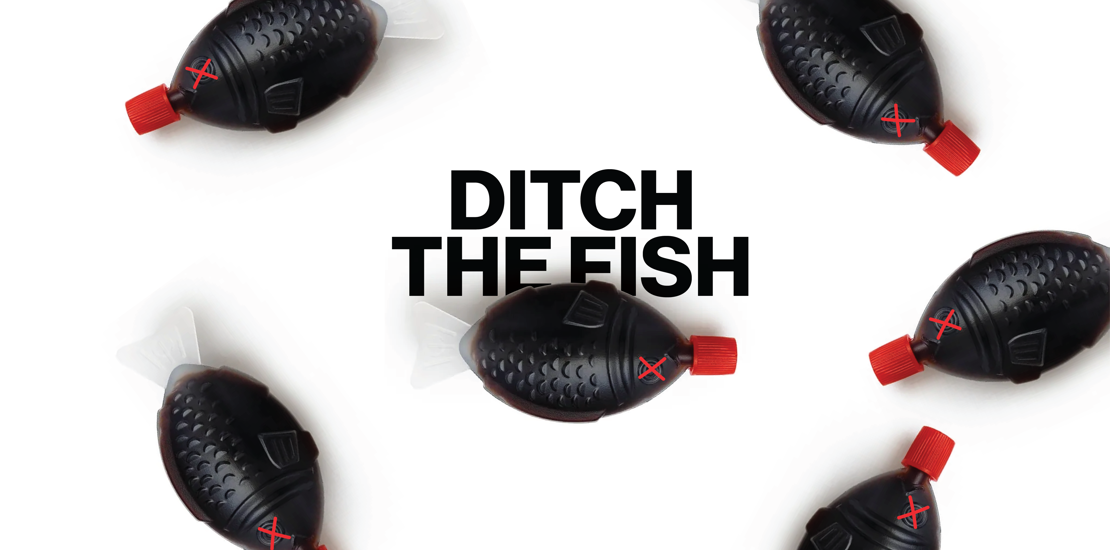
We have officially ditched the fish and removed single use plastic soy sauce containers across the Market.
Contributing to the Circular Economy
The Market aims to divert 85% of its waste from landfill by 2027.
To help achieve this, the Market’s waste is sorted into 16 different recycling streams and turned into a range of new products. Some of these include:
| This waste product | is turned into |
| Fish offal | Food for aquaculture, pet and livestock industries |
| Cooking oil | Biodiesel |
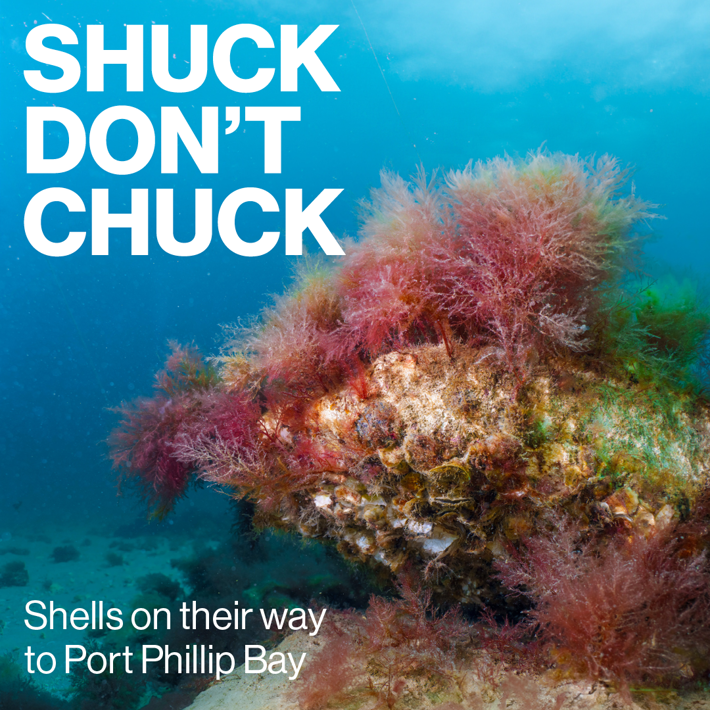
| Oyster and mussel shells | New reefs in Port Phillip Bay that provide a home for sea life |
| Soft plastics | Film-based products and carry bags |
| Coffee cups and lids | Residential and commercial construction products including seating, kerbing and car stops |
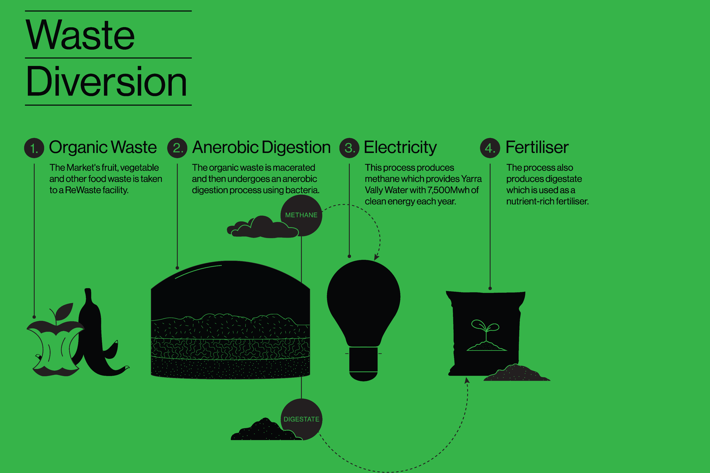
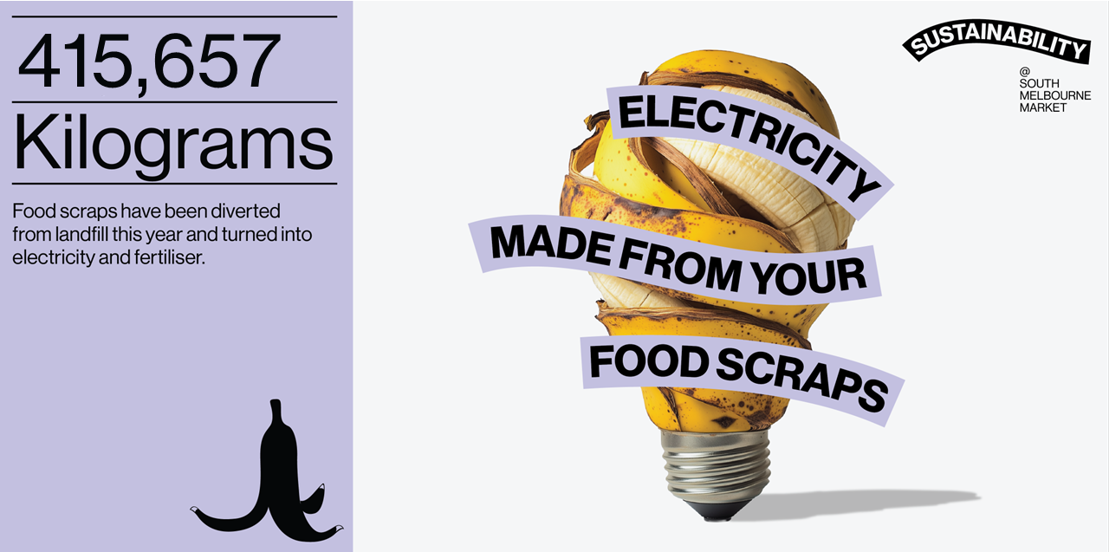
| Organics food waste | Fertilizer and energy (from methane) that is produced after going through an anerobic digestion process |
| Meat offal | Tallow and pet food |
Unfortunately, some of the Market’s waste cannot be recycled and ends up in landfill. Landfill waste generates methane, a greenhouse gas which typically ends up in our atmosphere and contributes to climate change. Instead, the methane from landfill is now captured and used to generate electricity.
Shuck Don’t Chuck Shell Recycling
While the Market is proud of all of our resource recovery initiatives, Shuck Don't Chuck is particularly close to our hearts.
Oyster, mussel and scallop shells are recycled in partnership with The Nature Conservancy. Shells are collected from the Market, cured and then used in reef restoration projects in Port Phillip Bay. Since 2015, The Nature Conservancy's Port Phillip Bay project has
- Restored over 12 hectares of reef (that's about the size of six MCGs!)
- Recycled over 700 tonnes of shells
- Built 49 new shellfish reefs across four locations.
You can help us by putting your shells into our dedicated shell bins and making sure no other plastic or other contaminants go into these bins. Click here to read more about the project and watch the video to learn more.
A Sustainable Asset
The Market has implemented a range of asset improvements to improve the sustainability of our operation.
Renewable energy
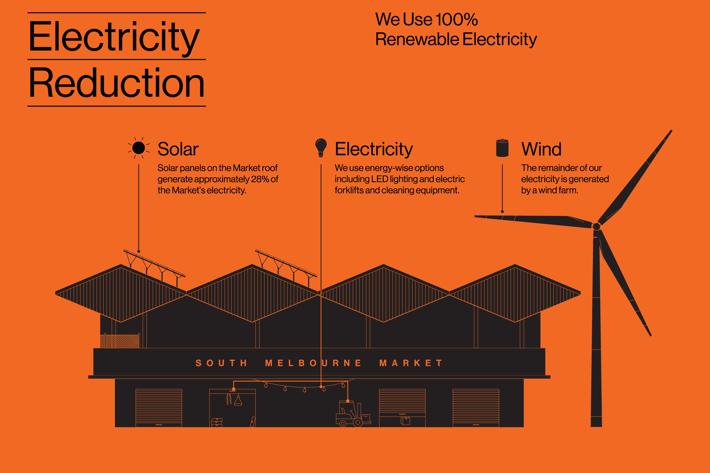
100% of the Market's electricity is generated from renewable sources. The Market has a 234kW PV solar panel system installed on the carpark's roof, generating approximately 33% of the Market's electricity. The remainder of the Market’s electricity is generated by wind farms at Crowlands, a small
agricultural community north of Ararat.
EV chargers
There are two electric vehicle (EV) charging stations available in the rooftop carpark and are free of charge to EV drivers.
LED Lighting
The Market's lighting is being upgraded to LED which uses 40%-60% electricity than traditional fluoro bulbs.
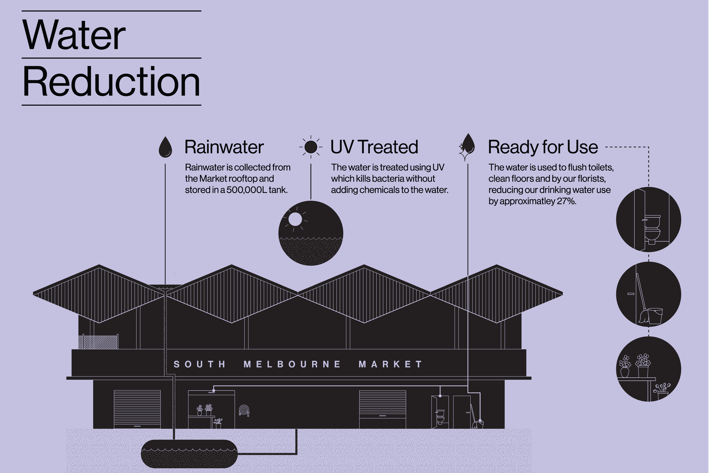
Rainwater capture
The Market has a 500,000 litre rainwater tank in the York Street carpark that collects water from the rooftop. The water is solar-treated and used for wash-down applications by our florists and to flush the toilets.